
Published
5 January 2026
Author
@Mark Lewis
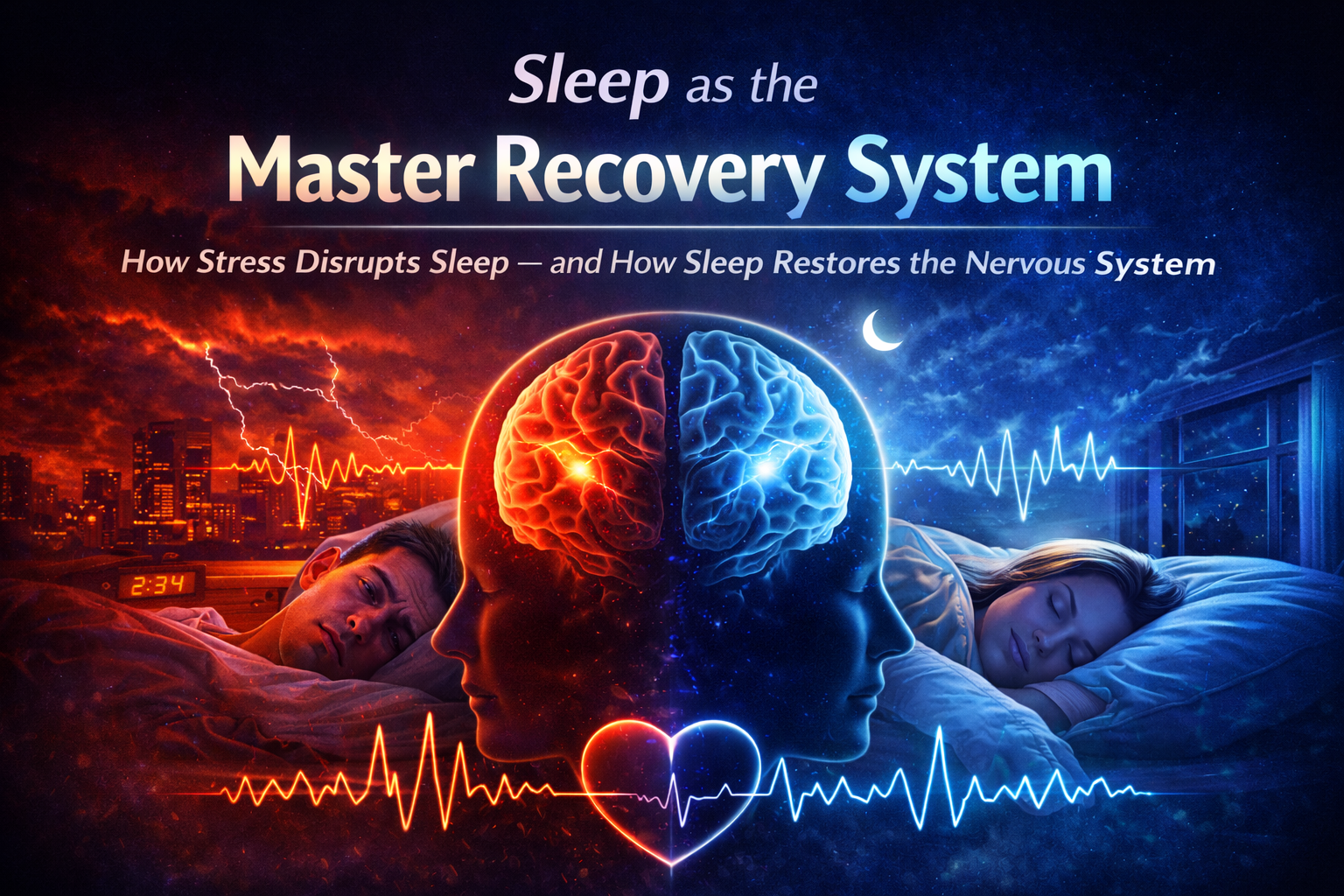
Sleep as the Master Recovery System
How stress disrupts sleep — and how sleep restores the nervous system
Overview
Sleep is the most powerful recovery tool the human body has.
While exercise, nutrition, and stress management all play important roles in health, sleep is the primary system through which recovery actually occurs. It is during sleep that the nervous system down-regulates, tissues repair, hormones rebalance, and the brain processes stress.
When sleep is disrupted, recovery capacity falls — even if everything else appears “optimised.”
Why Sleep Sits at the Centre of Recovery
Sleep is not a passive state. It is a highly organised biological process that coordinates:
- Nervous system regulation
- Hormonal balance
- Immune function
- Cognitive performance
- Emotional processing
- Metabolic health
From a stress and recovery perspective, sleep is the primary window for parasympathetic dominance — the state required for repair and restoration.
Without sufficient sleep quality and quantity, the nervous system remains biased toward stress activation.
Stress and Sleep: A Two-Way Relationship
Stress and sleep have a bidirectional relationship:
- Stress disrupts sleep
- Poor sleep amplifies stress
This creates a self-reinforcing loop.
How Stress Disrupts Sleep
Chronic stress affects sleep through several mechanisms:
- Persistent sympathetic nervous system activation
- Elevated evening cortisol
- Increased mental arousal (“wired but tired”)
- Reduced melatonin release
- Fragmented sleep architecture
Many individuals report:
- Difficulty falling asleep
- Frequent night awakenings
- Early morning waking
- Non-restorative sleep despite adequate time in bed
Importantly, these patterns often occur without conscious anxiety.
Sleep Architecture: Why Quality Matters
Sleep occurs in structured cycles, typically repeating every 90–110 minutes.
Key components include:
Non-REM Sleep
- Deep physical restoration
- Growth hormone release
- Immune repair
- Nervous system down-regulation
REM Sleep
- Emotional processing
- Memory consolidation
- Stress integration
- Cognitive recovery
Chronic stress reduces:
- Total sleep time
- Time spent in deep sleep
- REM sleep stability
This impairs both physical and psychological recovery.
The Nervous System During Sleep
During healthy sleep:
- Parasympathetic activity dominates
- Heart rate and blood pressure fall
- HRV increases
- Cortisol reaches its lowest point
- The brain clears metabolic waste
This nightly shift is essential for resetting the stress response.
When sleep is disrupted, the nervous system fails to fully enter this recovery state.
Why Sleep Is the “Master” Recovery System
Sleep does not just support recovery — it enables it.
Without adequate sleep:
- Exercise becomes a net stressor
- Stress tolerance declines
- Emotional regulation worsens
- Inflammation increases
- HRV trends deteriorate
- Burnout risk rises
In this context, sleep quality often determines whether other interventions succeed or fail.
Signs Sleep Is Limiting Recovery
Common indicators include:
- Persistent fatigue despite “enough” hours in bed
- Low or declining HRV
- Poor exercise recovery
- Increased irritability or low stress tolerance
- Reliance on caffeine to function
- Frequent illness or inflammation
These signals often precede diagnosable conditions and should be addressed early.
How Sleep Restores the Nervous System
Healthy sleep supports recovery through several mechanisms:
- Reduces baseline sympathetic tone
- Restores parasympathetic dominance
- Normalises cortisol rhythm
- Improves autonomic flexibility
- Enhances emotional resilience
In simple terms, sleep teaches the nervous system how to recover.
Practical Foundations for Restorative Sleep
Rather than focusing on sleep hacks, recovery-oriented sleep focuses on removing barriers to nervous system down-regulation.
1. Protect the Evening Wind-Down
- Reduce stimulation 60–90 minutes before bed
- Lower lighting
- Avoid intense cognitive work late at night
2. Support Circadian Rhythm
- Morning light exposure
- Consistent sleep and wake times
- Avoid bright light late at night
3. Regulate Evening Stress Load
- Avoid late intense exercise
- Minimise late caffeine and alcohol
- Use simple down-regulation practices (e.g. breathing)
4. Focus on Sleep Consistency First
- Regular timing often matters more than duration initially
- Sleep depth improves as rhythm stabilises
The Role of HRV and Wearables in Sleep
Wearables can provide useful insight into sleep and recovery when interpreted correctly.
Helpful metrics include:
- Overnight HRV trends
- Resting heart rate
- Sleep duration and consistency
They are most useful when:
- Reviewed weekly, not daily
- Interpreted alongside symptoms
- Used to guide recovery decisions, not induce anxiety
Sleep data should inform behaviour — not dictate it rigidly.
Common Sleep Myths That Impair Recovery
- “I can catch up on sleep later”
- “More time in bed always means better recovery”
- “Sleep issues mean something is wrong psychologically”
- “If I’m tired, I just need more willpower”
In reality, sleep disruption is often a physiological stress signal, not a personal failing.
How Sleep Fits Into the Stress & Recovery Framework
Within this series:
- Article 1 introduced nervous system regulation and HRV
- Article 2 positions sleep as the core recovery window
- Future articles will explore:
- Burnout and allostatic load
- Exercise as stress vs recovery
- Daily rhythm and low-effort recovery levers
Sleep is the foundation on which all of these rest.
Key Takeaway
Stress is unavoidable.
Recovery is optional.
Sleep is non-negotiable.
If the nervous system does not consistently enter a recovery state during sleep, resilience erodes over time — regardless of motivation, discipline, or intent.
Improving sleep is often the highest-impact intervention for restoring nervous system balance and long-term health.