
Published
11 March 2026
Author
Mark Lewis
Why the state of your gut may have more to do with how you feel mentally than you ever realised
Part 3 of the Your Gut, Your Health series. Start at the beginning: Gut Microbiome Testing →
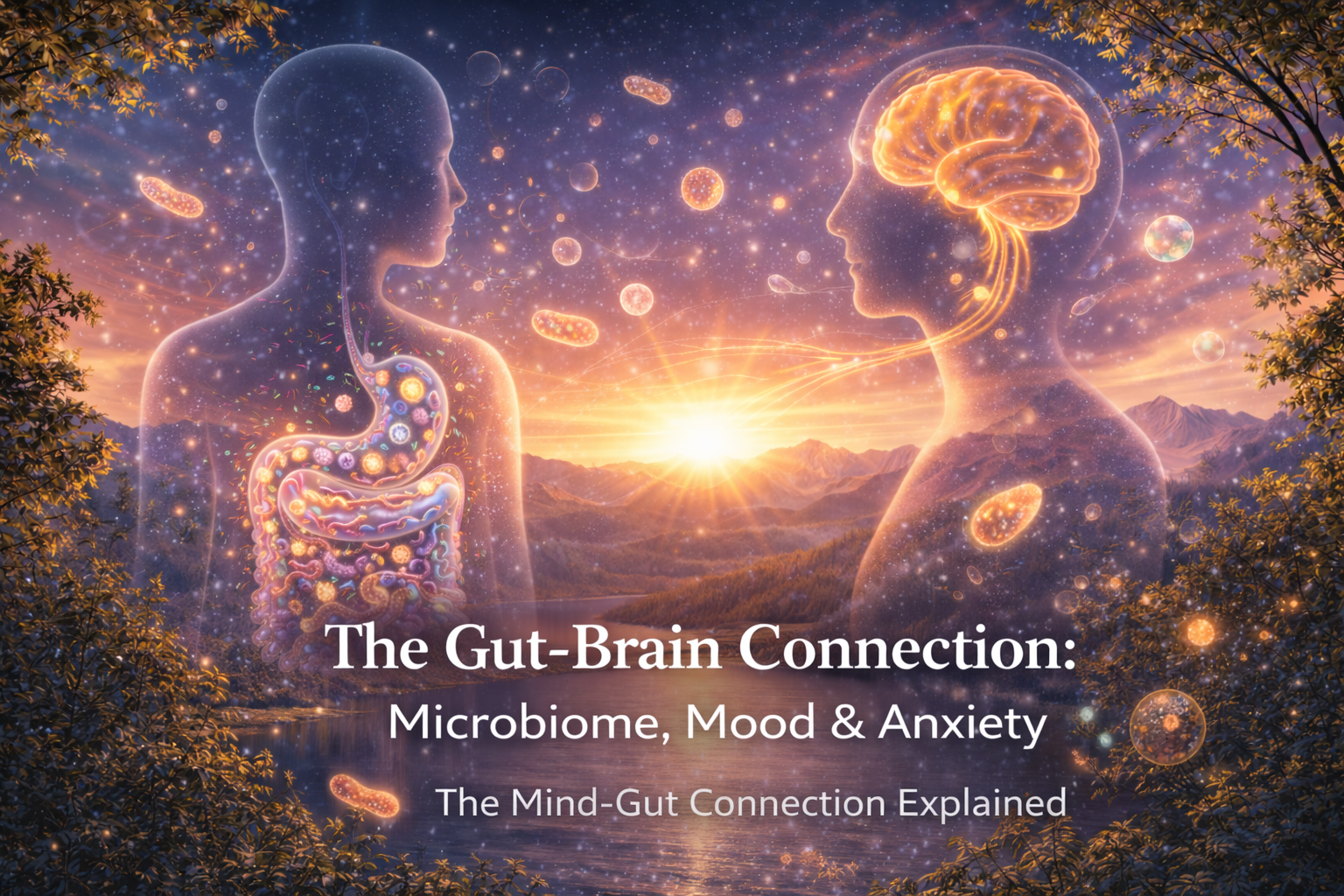
If you've ever had a "gut feeling," felt butterflies before a big moment, or noticed your digestion spiral during a stressful period — you've experienced the gut-brain connection firsthand. What science is now confirming is that this relationship runs far deeper than instinct. The community of microorganisms in your gut actively influences the chemistry of your brain, shaping mood, anxiety, stress resilience, and even cognitive clarity.
1. The Gut-Brain Axis: A Two-Way Highway
The gut-brain axis (GBA) is a bidirectional communication network linking the gastrointestinal tract to the central nervous system. It operates through multiple pathways simultaneously — neural, hormonal, immune, and metabolic.
The primary neural pathway is the vagus nerve — the longest cranial nerve in the body. The vast majority of signals travelling along the vagus nerve travel upward — from the gut to the brain. This makes the gut a major information source for the brain, not merely a recipient of its instructions.
The broader term microbiota-gut-brain axis (MGBA) reflects the recognition that gut microbes are active participants in this communication network, not passive bystanders.
2. Your Gut Produces Most of Your Serotonin
Approximately 90–95% of the body's serotonin is synthesised in the gut, produced by enterochromaffin cells in response to signals from gut bacteria. Serotonin is the neurotransmitter most associated with mood regulation, emotional stability, and wellbeing.
Gut bacteria are also involved in the synthesis and regulation of GABA — the brain's primary inhibitory neurotransmitter, which plays a central role in reducing anxiety and promoting calm — and dopamine precursors involved in motivation and reward.
3. The Microbiome and Anxiety: What the Evidence Shows
Mendelian randomisation analysis has demonstrated that gut microbiota dysbiosis is a causative factor in depression and anxiety, rather than merely a consequence of these disorders.
Key findings include:
- Altered microbial populations in anxiety disorders. Reduced levels of Faecalibacterium prausnitzii and Coprococcus — species known to produce anti-inflammatory SCFAs — and elevated levels of pro-inflammatory bacterial genera are consistently observed.
- Pro-inflammatory bacteria correlate with mood disorders. Elevated levels of Escherichia and Enterobacter genera have been linked to increased neuroinflammatory responses.
- Early-life microbiome disruption has lasting effects. Stress in early life produces significant changes in gut microbiota composition that persist into adulthood.
4. Depression, the Microbiome, and the Inflammatory Link
When gut barrier integrity is compromised, bacterial products including lipopolysaccharide (LPS) can enter systemic circulation. LPS triggers the production of pro-inflammatory cytokines, activates microglia, and has been linked to both cognitive disruption and depressive symptoms.
This inflammatory pathway helps explain why conditions involving chronic low-grade inflammation — obesity, metabolic syndrome, autoimmune conditions — often carry elevated rates of depression and mood disruption. The gut may be the common thread.
The Mediterranean dietary pattern has demonstrated meaningful benefit in reducing symptoms of depression across multiple studies — largely through its combined effects on gut health and systemic inflammation.
5. Brain Fog, Cognitive Performance, and the Gut
Brain fog is increasingly being linked to gut microbiome disruption through multiple mechanisms:
SCFA production and neurological health. Butyrate, produced by gut bacteria fermenting dietary fibre, crosses the blood-brain barrier and plays a critical role in reducing neuroinflammation and preserving neuronal integrity.
Tryptophan metabolism. The gut microbiome significantly influences the metabolic pathway that produces serotonin and other compounds with direct effects on cognition and mood.
A 2025 randomised controlled trial found that a prebiotic blend of inulin and fructo-oligosaccharides improved cognitive performance in adults aged 60 and over compared to placebo — adding clinical weight to the gut-cognition connection.
6. The Gut-Brain Axis and Chronic Stress
Chronic stress disrupts the gut microbiome; a disrupted microbiome impairs the body's stress response regulation. This creates a cycle: stress disrupts the gut → gut disruption worsens stress response → heightened stress further disrupts the gut.
Stress management practices — including mindfulness, adequate sleep, regular physical activity, and social connection — have direct positive effects on gut microbiome composition, not just psychological wellbeing.
7. What This Means Clinically
At Helix, when patients present with chronic fatigue, mood disturbance, anxiety, or brain fog, gut health is always part of our assessment. A comprehensive microbiome test can reveal patterns in microbial composition and function that provide meaningful context for these symptoms — and actionable targets for intervention.
Not Sure Which Test Is Right for You?
Use our free 2-minute screening tool to find the Microba Microbiome Explorer™ tier that best matches your symptoms and health goals.
Continue Reading in This Series
- Part 1: Gut Microbiome Testing: What It Is & Who Needs One →
- Part 2: What Does Your Gut Microbiome Say About Your Health? →
- Part 4: How to Improve Your Gut Microbiome: Diet, Lifestyle & Evidence-Based Strategies →
- Part 5: The Gut Microbiome & Weight Loss: What the Science Actually Says →
- Part 6: Gut Dysbiosis: Causes, Symptoms & How to Restore Balance →
References
- Zhu, Z. et al. (2025). The microbiota-gut-brain axis in depression. Frontiers in Immunology. https://doi.org/10.3389/fimmu.2025.1644160
- Park, J.C. et al. (2025). Beyond the gut: decoding the gut–immune–brain axis. Cell & Molecular Immunology. https://doi.org/10.1038/s41423-025-01333-3
- Frontiers in Psychiatry (2025). The gut–brain–circadian axis in anxiety and depression. https://doi.org/10.3389/fpsyt.2025.1697200
- Frontiers in Microbiology (2025). Gut microbiota as a novel target for treating anxiety and depression. https://doi.org/10.3389/fmicb.2025.1664800
- Porcari, S. et al. (2025). International consensus statement on microbiome testing in clinical practice. The Lancet Gastroenterology & Hepatology, 10(2), 154–167.